
Joint Forces Staff College
Norfolk, VA
"That All May Labor as One"
The Verdict
Located at Naval Support Activity Hampton Roads adjacent to Naval Station Norfolk, the Joint Forces Staff College stands as the Department of Defense's premier institution for operational-level joint education. Established in 1946 as the Armed Forces Staff College with 150 students from all services in its first class, JFSC was founded to address a critical lesson from World War II: that effective military operations require seamless cooperation among the services.
Originally housed in converted administration buildings on a former U.S. Naval Receiving Station, the college completed its transition to a permanent institution with Normandy Hall's construction in 1962. Incorporated into the National Defense University in 1981 and renamed Joint Forces Staff College in 2000, the institution continues its founding mission of developing joint warfighters who think and operate beyond service parochialism.
Campus & Cadet Life
About
The Joint Forces Staff College (JFSC) in Norfolk, part of National Defense University, trains mid-career officers in joint operational planning through a 10-week in-residence program.
Admissions & Selectivity
Admissions Philosophy
selective
Key Requirements
- Military officers at O-4 to O-6 grade levels (Major/Lieutenant Commander through Colonel/Captain)
- Completion of JPME Phase I or Intermediate Level Education (ILE)
- Bachelor's degree from an accredited institution
- Service nomination through respective military branch
- Federal civilians typically at GS-13 to GS-15 level or equivalent
- International military officers of equivalent rank from allied nations
- Security clearance appropriate for joint operations planning discussions
Location
Campus & Facilities
Campus Size
Part of Naval Support Activity Hampton Roads
Housing
N/A
Enrollment
1,025
Campus Life
Daily Schedule
The Joint and Combined Warfighting School (JCWS) conducts a rigorous 10-week in-residence program that immerses students in joint operational planning and warfighting. The academic day combines lectures on joint doctrine and operational art, seminar discussions in genuinely joint environments mirroring diverse joint staff compositions, and practical exercises applying the Joint Operation Planning Process. Students also participate in research visits to the Joint Staff and interagency organizations, gaining firsthand exposure to strategic-level operations.
Discipline Model
As a senior professional military education institution, JFSC does not operate traditional barracks. Students on 10-week TDY attend from their permanent duty stations and typically reside in temporary lodging on base, military family housing, or off-base accommodations in the Norfolk-Virginia Beach metropolitan area. The campus includes Normandy Hall with modern classrooms and seminar rooms, student support facilities, and access to Naval Support Activity Hampton Roads amenities. Liberty Military Housing offers two, three, and four-bedroom family homes for those requiring longer-term accommodations.
Academics & Outcomes
College Matriculation
N/A
Where Graduates Go
N/A - Professional Military Education institution
Hall of Fame
Norton A. Schwartz
19th Chief of Staff of the United States Air Force (2008-2012)
John W. Raymond
First Chief of Space Operations, U.S. Space Force (2020-2023)
Lloyd W. Newton
Four-star Air Force general and first African American Thunderbirds commander
Keith L. Ware
Medal of Honor recipient, U.S. Army Major General killed in Vietnam
Samuel W. Koster
Superintendent of the United States Military Academy at West Point
Herman Nickerson Jr.
Marine Corps Lieutenant General, commanded III Marine Amphibious Force in Vietnam
Carl W. Hoffman
Marine Corps Lieutenant General, commanding general of Fleet Marine Force Pacific
Forrest S. McCartney
Director of Kennedy Space Center and Air Force Lieutenant General
Robert C. Springer
NASA astronaut, flew on Space Shuttle missions STS-29 and STS-38
James S. Voss
NASA astronaut, veteran of five Space Shuttle missions and ISS Expedition 2
Athletics & Physical Training
Mandatory PT
Physical fitness remains an important component of military readiness and leadership. While JFSC does not mandate formal PT for students during the 10-week program, all students are expected to maintain service-specific fitness standards. Students have access to Naval Support Activity Hampton Roads fitness facilities throughout their course of study.
Facilities
NSA Hampton Roads Fitness Center with cardiovascular and strength training equipment. Base recreational facilities including tennis courts, basketball courts, and running trails. JFSC Park offers outdoor recreation space for students and families. Access to Morale, Welfare and Recreation programs throughout the Hampton Roads military community.
Photo Gallery

Related Schools
Marine Corps War College
Quantico, VA
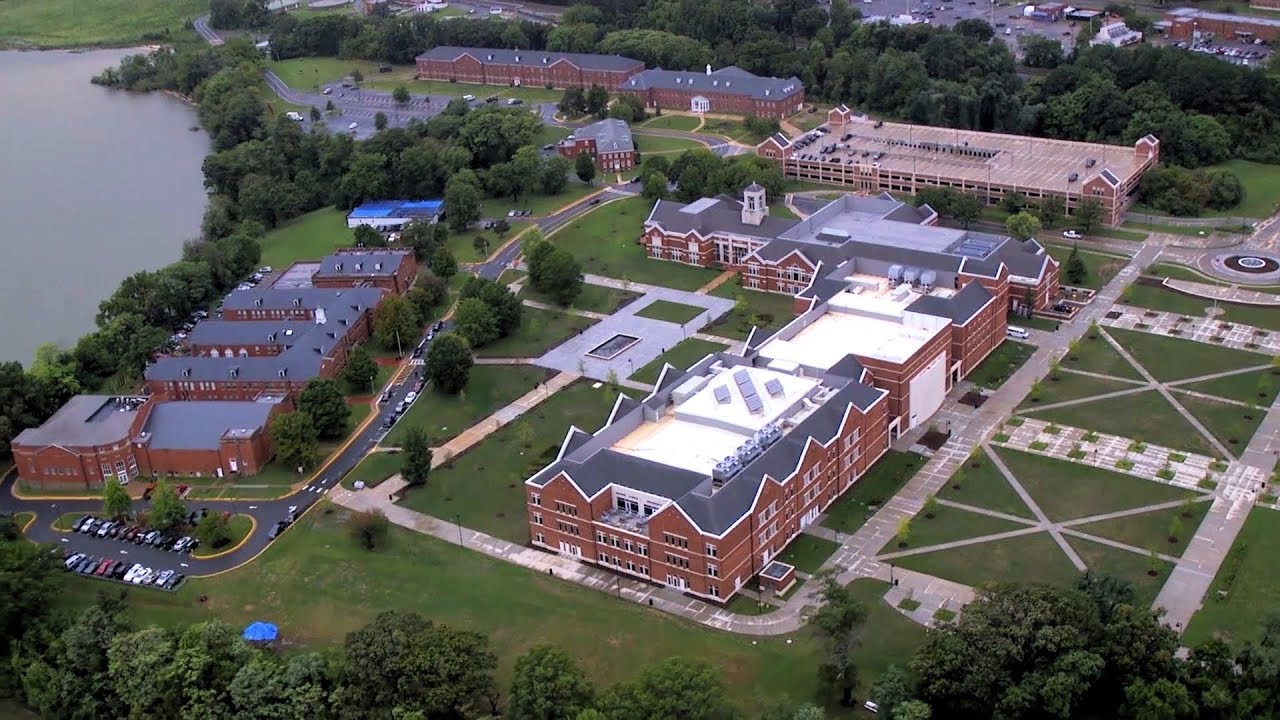
The Marine Corps War College (MCWAR) at Quantico is the senior school of Marine Corps University, offering joint professional military education to a class of about 30 senior officers.
Benedictine College Preparatory
Richmond, VA
Benedictine College Preparatory is a Catholic all-boys military day school in Goochland, Virginia, founded 1911. Grades 9-12, about 520 cadets; day tuition $25,650 (2025-26).
Franklin Military Academy
Richmond, VA
Franklin Military Academy in Richmond, founded 1980, is the first public military school in the United States — a tuition-free Army JROTC magnet school serving grades 6-12.

Fishburne Military School
Waynesboro, VA
Fishburne Military School in Waynesboro is Virginia's oldest private military school (founded 1879) — an all-boys Army JROTC boarding school for grades 6-12 with about 100 cadets.
Fork Union Military Academy
Fork Union, VA
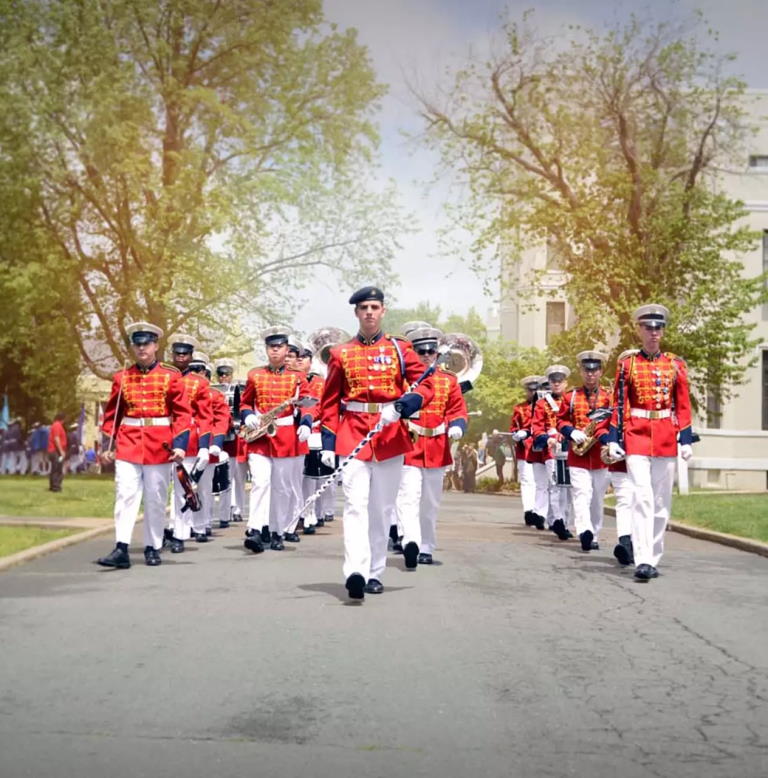
Fork Union Military Academy is an all-boys Christian military boarding school in central Virginia — grades 7-12 plus post-graduate, founded 1898, known for its One-Subject Plan.
Hargrave Military Academy
Chatham, VA
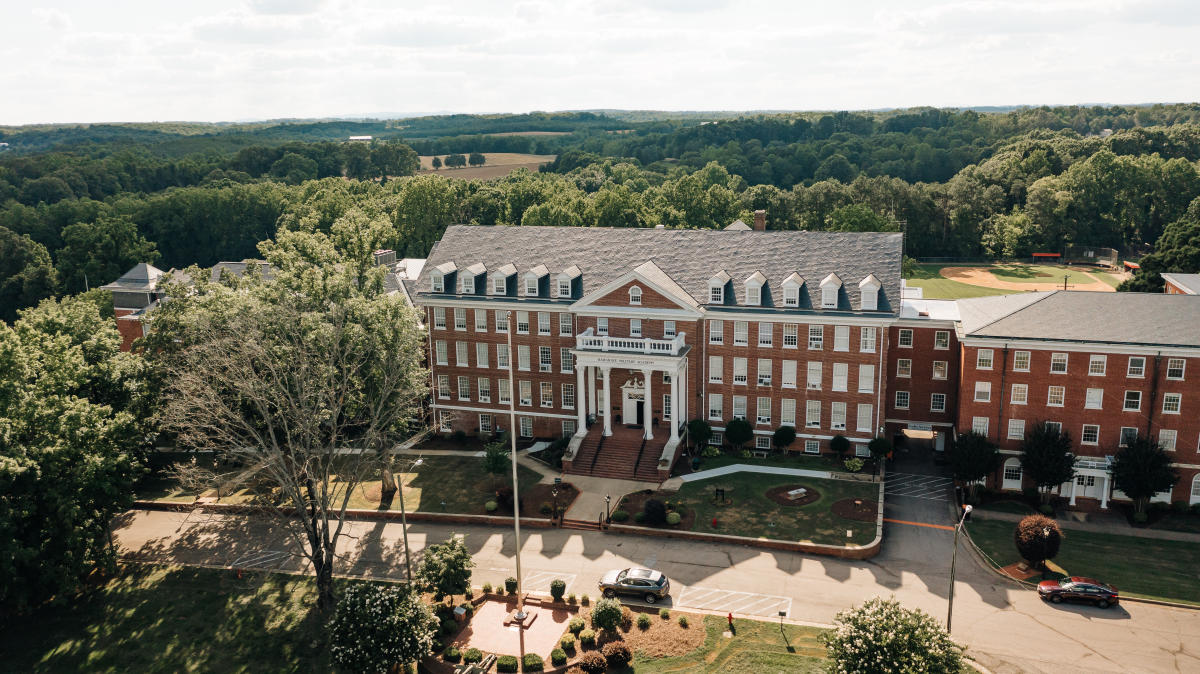
Hargrave Military Academy is a private, all-male, military boarding school in Chatham, Virginia. It is a preparatory institution for college and United States service academies, serving boys from around the world for grade 7 through post-graduate (PG).
Guides & Resources
Virginia Private School Tax Credit: EISTC Cuts Tuition 65%
Virginia's EISTC gives a 65% state tax credit for donations to scholarship foundations — a $10,000 gift can cost ~$2,625 and fund private military school tuition.
Career Paths After Military School: Most Grads Go Civilian
70-80% of military school graduates go on to civilian colleges and careers—in business, law, medicine, and tech—and employers value the discipline they bring.
Texas Hazlewood Act: 150 Hours of Free College Tuition
The Hazlewood Act gives Texas veterans up to 150 hours of free tuition at public colleges, including Texas A&M's Corps of Cadets. Unused hours transfer to children.
Missouri Military Academy: Tuition, Daily Life & Fit
Missouri Military Academy in Mexico, MO is the state's only military boarding school — all-boys, founded 1889, boarding ~$40,000. Daily life, funding, and fit.
Free Military Schools: 4 Tuition-Free Options
Yes — four options charge no tuition: public military academies, charter schools, service academies, and Youth Challenge. Private boarding runs $25,500-$67,000.
IEPs and 504 Plans at Military Schools
Many military schools honor accommodations like extended test time, but private schools aren't required to follow IEPs. 7 questions to ask admissions first.